Planting the Fall Garden

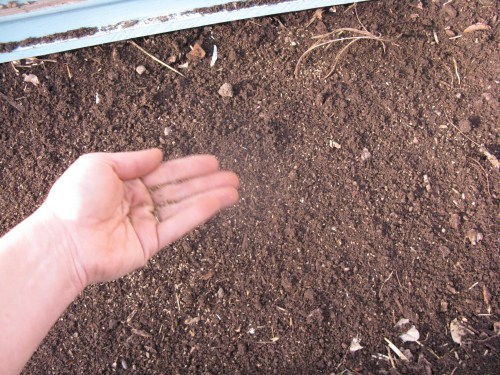
This post is a little over due, that is if you are following my garden advice, but not to worry it is not too late to plant your fall crops.  The past couple of weeks have been busy around here and it seems any garden time I have is going to preserving rather than planting.  But in this high desert garden spring and fall are optimal time for planting and reaping.  The cool weather and rains that the ‘shoulder seasons’ provide are great for greens, roots and many herbs.  Come late July and early August I fill in all those nooks and crannies that have been opened up by summer harvests with all kinds of leafy goodies. For example the garlic bed dug in July is now sprouting with fall lettuce and the potato bed will soon follow with more salad greens.  Sometimes you can even plant among big shady things in the heat of the summer if you know they will be coming out soon enough to give over the light and nutrients to the little guys, this is what they call using a nurse crop.  I harvest my broccoli,  move the irrigation over just a couple of inches and plant spinach.  In a couple of weeks the spinach will have germinated, the brocoli be done and ready to pull out( I actually just cut it off at the base and leave the root as to not disturb the bed too much, when forking happens in spring they will all come out).  When using a bed continuously it does require some top-dressing of compost, but there really is no need to re-dig the whole bed.  Just scratching where you want to seeds and covering them with a light layer of compost should do the trick.
When choosing crops for fall just think of cool season crops and do a little math.  Any good seed packet will say ‘Days to Maturity’ for you crop and variety.  If you figure the last frost date in Santa Fe is October 15th– that is about 60 days from now…so most lettuces are 60-70days to maturity (keep in mind, many people eat lettuce as baby leaves & surely don’t wait 60 days)  Also keep in mind that even if you have some crops that aren’t big enough to eat when the first frost does come, covering crops with cold frames, hoops and row cover and even blankets for the night protects them well and will buy you soon time.  Here in the high desert it takes a while to really have consecutive killing frosts to take a crop down.  Many people, myself included have kale for Christmas (the cold air makes it sweeter!!)

You may also want to keep in mind soil temperature, as that matters more than air temperature for seed germination.  It is more crucial in the spring when the soil is simply too cold to get good germination, but I have also heard if the soil is too hot, cool seasons seeds can have a hard time germinating as well. (Though truthfully I haven’t run into that yet)
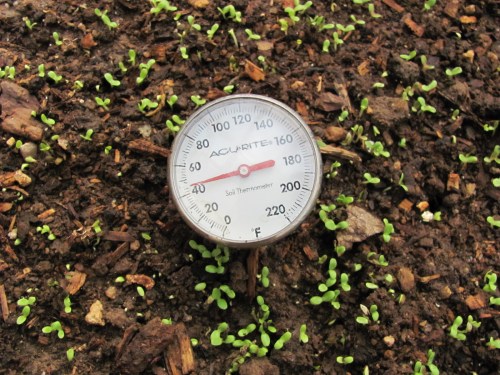
This chart was borrowed from CASFS where I studied Ecological Agriculture and they Adapted it from UC Davis Vegetable Research and Information Center’s Seed Germination Temperatures chart (http://vric.ucdavis.edu/veginfo/)
Vegetable   Optimal Soil Temp for Germination   Days to Germinate

Bean, snap                        75 – 80                                    7
Bean, lima                         85                                             7 – 10
Beet                                    75                                              7 – 14
Broccoli                             75                                              7
Cabbage, heading            68 – 75                                    5 – 10
Carrot                                 75                                             12 – 14
Cauliflower                        68 – 86                                   5 – 10
Celery                                 68 – 76                                   10 – 14
Collard                               68 – 76                                    4 – 10
Corn                                    70 – 86                                   7 – 10
Cucumber                          70 – 86                                   7 – 10
Eggplant                             70 – 86                                   10
Endive                                 68 –75                                    10 – 14
Kale                                      68 – 75                                   5 – 10
Leek                                     68 – 70                                   10 – 14
Lettuce                                68 –70                                     7 –10
Melon                                  80 –86                                    4 – 10
Mustard Greens                68 – 70                                    5 – 10
Onion                                  68 – 70                                   10 – 14
Onion, bunching               60 – 68                                   10 – 14
Parsley                                65 – 70                                     11 – 28
Parsnip                               68 – 70                                    14 – 21
Pea                                       65 – 70                                     7 –14
Pepper                                 75 – 85                                     10
Pumpkin                             68 –75                                      7 – 10
Radish                                 65 – 70                                     5 – 7
Spinach                               68 – 70                                     7 – 14
Squash, summer               70 – 85                                     7 – 14
Squash, winter                   70 – 85                                    7 – 14
Tomato                                75 – 80                                    7 – 14
Turnip                                  65 – 70                                     7 – 14

Now if you like charts there is a great one Eliot Coleman has in the back of his book, Four Season Harvest on when to sow fall plantings.
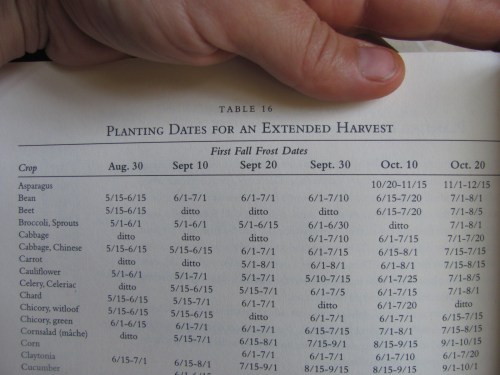
Which I believe they have at the library, which I guarantee if you read the whole thing you will need no advice from me!!

Wow that was a lot of information, but when it is all said and done you could just do what I do; scratch some dirt, throw in some cilantro, lettuce, spinach, dill, arugula, mache, carrot, turnip, beet, kale and chard, cover with compost and call it a day!! Don’t forget to leave a little open space for the October garlic planting, oh, and pray for more rain!!

Here are a few links if you would like to learn more
Home Grown New Mexico

Sow True

Mother Earth News

Organic Gardening

Taming the Wild

After three weeks away, I returned to the wonderous and wild place we call home.

After Vermont I must admit, everything seemed a bit dry and dusty, but thanks to the drip irrigation and caring eye of our house sitter (thanks Dad), the garden has grown and thrived in my absence; becoming a wild place almost beyond my reach.  I have spent the week pruning back those tomatoes, quite contented at the fruit set… My great experiment in tomatoes growing will be if I can grow and can all my family’s tomato needs for the year.  Last year I bought & canned 80lbs of second(mushy) tomatoes from a farmer friend and my hope is this year I will have the 80lbs myself (Yes, that is A LOT of tomatoes!!) but right now I am down to 2 pints of red sauce and 6 half pints of Ketchup from lasts years preserves, so it looks like 80lbs was NOT too much for this family!!

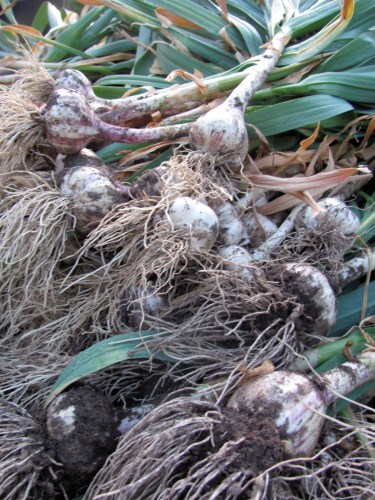
I am also cleaning the garlic I harvested and put to cure before we left..

11lbs of hard neck and 2lbs soft neck, sorting our seed for next year (the biggest and bestest) then the ones to use right away (any damaged, opened, or mushy) then of course the rest for use throughout the year… I will be curious to see, how much garlic this household needs for one year? Will 13lbs be enough (we eat a lot of garlic!)? Then of course peeling and processing that garlic to make Pesto with the 1lb of basil I picked–(which made almost 1 dozen half pints of Frozen Pesto) and that is just the beginning– (PS I will trade Basil for ANYTHING!!)

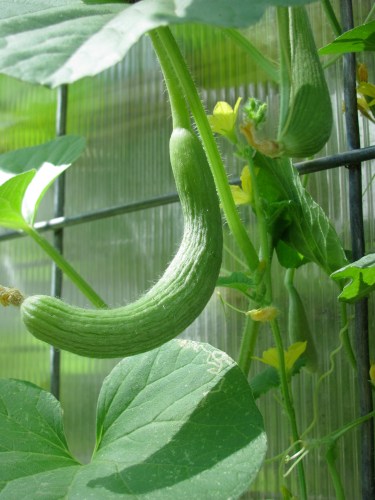
There is also choke cherries to pick, the plums & apricots to process, herbs to dry, and oh yeah the fall garden to plant.  Maybe I am not Taming the wild at all!! Should be an exciting month as I watch the Cucumbers plump up for pickles and the potatoes swell underground, I am sure glad to be home and unscheduled to reap these bountiful harvests and pray for rain!

Growing up

Tomato harvest a few years back, this year hoping for even more!!

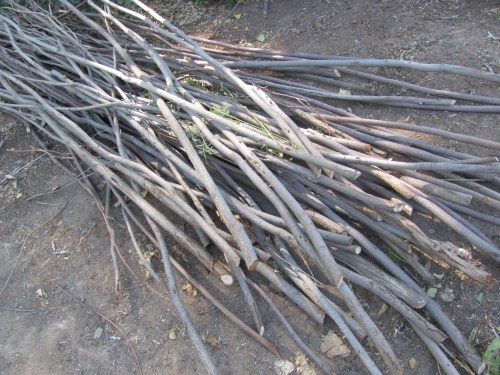
We are going for it this year in the garden.  We made a big investment in compost, drip tape and mulch, as well as time, effort & love.  In exchange I am really hoping to yield some serious garden bounty.  We now have 85 tomato plants out back, over a dozen varieties, in our newly dug garden.  We have planted, mulched and now it is time to stake so we can actually get at that fruit.  We planted pretty intensively, as the garden is freshly dug and filled with lots of compost, we well as tons of leaves and Straw.  Technically we could just let the tomatoes ramble all over the ground, which some people swear by,  for easier harvesting and better use of space we will trellis.  Trellising also keeps those precious fruits away from pests and robbers.  There are lots of ways to do so and gardeners love to debate about it; Towers, Cages, Remesh, Twine, but guess what I picked….Yep you got it, Willow.

Lots of fresh-cut willow

Remember my willow fence, well the willow patch by the river just keeps giving and actually the more I prune it back, the better the yield.  I harvested, yes, 85 tall thick straight willows, (it is a lot but the patch is huge and it barely makes a dent, I am always careful to wild craft gently and respectfully) I will use one for each tomato plant.  The inspiration, you see was Italy……
The Cinque Terre, Italy

We were there a few years back attending Terra Madre,

Proud Bean Farmer at Terra Madre

an international gathering of Slow Foodies, which is totally amazing and really worth learning more about… but more than a food tourist, I am a farm tourist.  I love nothing more than seeing the gardens of a place, touching the soil, smelling the blooms.  In fact I plan on reporting back here in my own personal column about my garden tourism, but that will have to wait for a rainy day….Back to tomatoes…..Here are some trellis’  we saw while traipsing the Italian countryside.
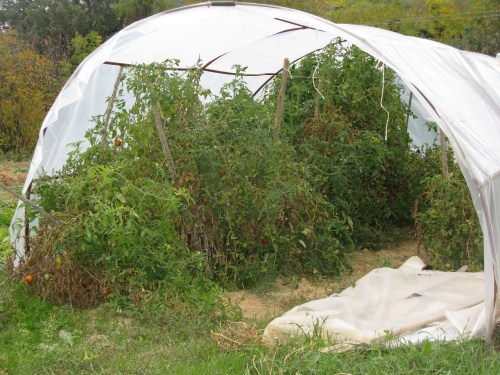
Tomatoes in a hoop house in Tuscany, Italy

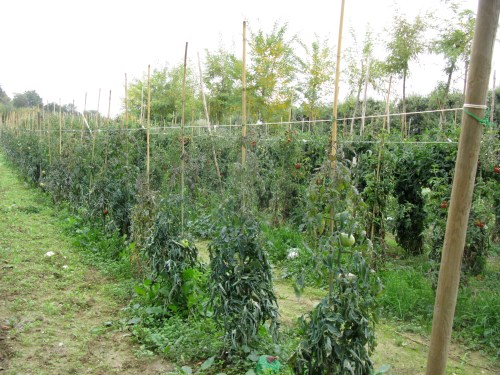
Tomato trellis in Tuscany, Italy

Seems to me the basic idea is just one vertical stake per plant with one strong cord across the top holding them all in place. So with 85 willow, some Cedar Posts, and tie wire, this is our Whimsical version of Italian style tomato staking.

Willow leaning in on one tie wire line pulled tight between cedar stakes

Now when you grow intensively like this you generally prune tomatoes as well.  I will be training each plant up one stake and will be pruning to one main stem.  Here is a video I found that explains this well from Fine Gardening, another twist on this is from Johnny’s Seeds which includes twine weaving for trellising.  Tomatoes don’t NEED to be pruned, but if you are growing intensively it is good idea, just to avoid too much vegetative mass rubbing against each other creating opportunity for disease to spread as well as encouraging the plants to put their energy into fruit rather than shoot.

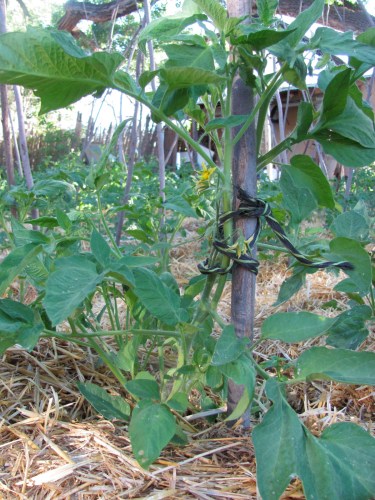
Each plant is tied to it’s stake with reused bailing twine, don’t throw that stuff out, it is good & strong, and lasts for years and years!

So there you have it, Let’s hope they grow up well!

June Gardening=Mulch!!

AHHH, Yes you may take a deep breath, everything is in the ground, water system set up, things are growing, sun is shining and so now what?  We pray for rain & wait of course for the bounty of our hard work to come rolling in….

Planted up and ready to grow

but wait one more thing.

MULCH!!!

It feels to me like this may actually be the single most important thing about southwest gardening.

All that precious water simply evaporates away if you don’t mulch, all those little weeds grow up too quickly if you don’t mulch….

and that soil, well it just bakes to hard clumps if you don’t mulch,

and what about all those critters who need to be kept moist and cool, they are lost without mulch cover!!…

So my friends mulch if you can, and generously!! Here is an article that will tell you all you need to know and more about mulching from Organic Gardening and here is another about a straw mulch extremist who I adore, Ruth Stout.

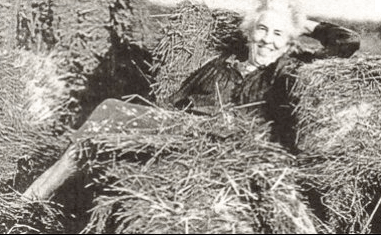
Ruth Stout in a bed of straw

But if you would rather not click away just yet, here is the short of it:

I use old cottonwood leaves, because they fall on my garden and my neighbor rakes all that fall on his yard, bags them up, and passes them over the fence to me so it is a no effort system, so if you have such a no effort system, do that!!

But I also use straw.  I prefer old straw, half rotten and wormy if possible.  I try to buy a few bales every year and rot them down a bit, but if you used some for a chicken house, compost bin or garden bench you want to retire this season, perfect!!  If you must buy new, well do what you have to do, but they seem to be going up in cost every minute!!

Now a word about straw…Straw is a wonderful mulch for Southwest gardening.  If you live in a wetter area like I know some of you do, straw, when wet a rotting can harbor mold, slugs and all kinds of stuff you may not like in your garden if you live in wet place so read the article above to find what the best mulch is for your area….

…Here in the southwest straw is great but only one problem…..it blows away!!  Most likely you have wind in your garden, and once dry, straw blows away very quickly, so here are a few tips on making straw mulch stay put.

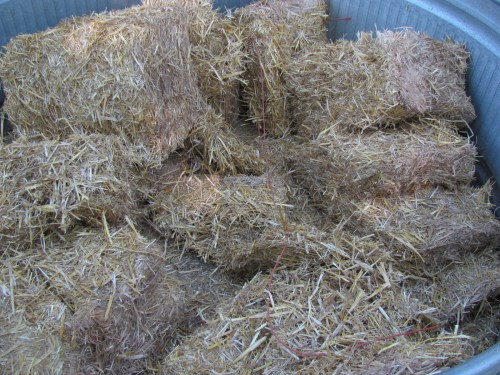
Sheets of mulch in the cattle tank, so none is lost in the mulching process!

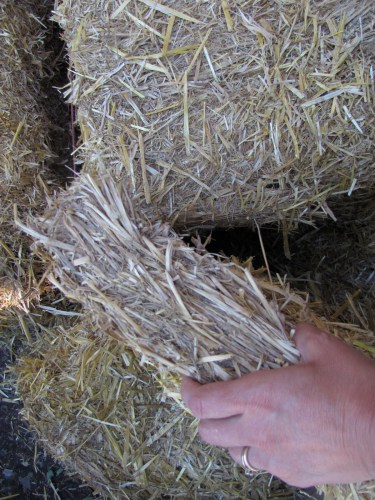
1- Sheet Mulch-Straw bales come apart in layers, or sheets.  Leave them be!! Don’t shred the straw into a million strands, though kids love to do that, leave the sheets and just lay it down flat, like tucking in those little veggies under a blanket (kids learn to love that too).  The bales will naturally come apart in sheets about 2 inches think, and that is fine, wonderful & thick and good.  If you work around what is planted and make a huge blanket over your garden, only what you leave holes for will grow.  This method is great because the straw is matted together and doesn’t blow away as easily.

Straw bales break apart naturally into sheets

2- Pre-soak your straw– even if it is older, straw can always benefit from pre-soaking.  I like to use our cattle tank, but a wheel burrow works just fine too, or a baby pool, whatever you have.  Break the hay into sheets, lay in one layer in the bottom of your pool, and cover with water.  Let steep over night and the next day take the sopping wet straw and tuck those plants in.  Also a great job for kids, (who don’t mind getting wet and dirty)It is ok if it fall apart a little bit, it is inevitable.  If you can’t pre-soak, post soak.  Mulch well and just water the heck out of it with a hose.  If your garden is on drip irrigation you may need to do this anyway once in a while to just keep it down.

Old straw soaking in rain water

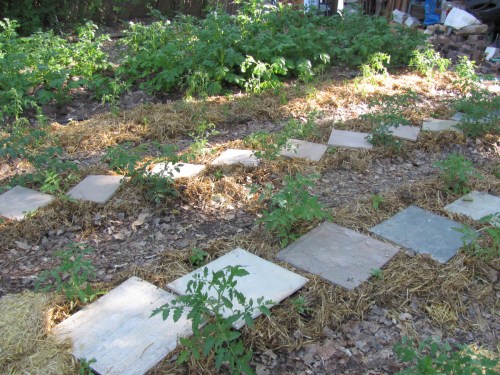
3- Weigh it down– Traditionally mulching was done with rocks in many fields out here in the high desert.  Rocks keep in moisture, create thermal mass, and suppress weeds…so why not mulch with them now?  Many people still do rock mulching, but I find a combination works well when straw mulching.  Flagstone is great because it covers a lot of surface without being to hard to carry and you can step on them, river rock is good too…I actually had a pile of old tiles I use for my jewelry markets lying around (resting this season), so I layed them on my mulch to keep it from blowing away and so far so good, though my garden looks a bit like a kitchen floor which I am not so sure about, hmmmm…..

Sheets of soaked straw mulch covered in stray kitchen titles to weigh them down, catch rain water, provide thermal mass, and suppress weeds.

But I tell you, since I did this mulching a few days ago my garden seems to be beaming with delight, I truly think the plants love mulch.

Tomatoes delighted by mulch

So mulch, well and mulch often and happy waiting for that garden bounty, I know I am!!

Flower day

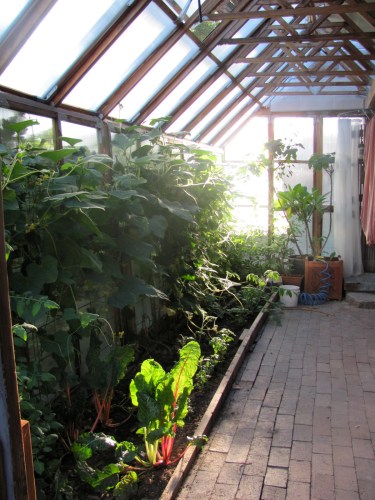
It seems everyday is a flower day these days, but none quite like today. The moon was in Libra……..So thus a flower day in the biodynamic calender, so I planted out Snapdragons, Verbascum, Thonia, and Calendula, cleaning out the greenhouse so the tomatoes, cucumbers and basil can now go full force.

…But as I planted and watered and doted on my beloved flowers I got an amazing show from the Oriental Poppy off in the corner of the garden, minding her own and only business of blooming.

At 7am she looked like this…

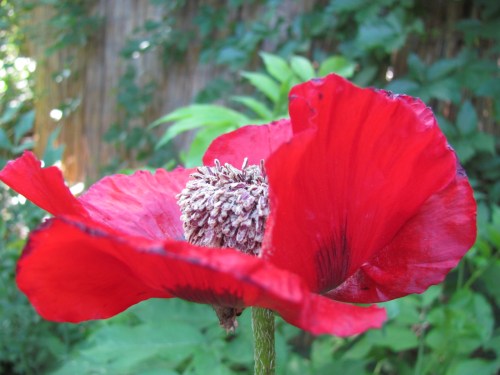
Pushing off her little hat, showing her blooming face to the world for the first time

And then by 11am she was open for pollination…

Full of powdery pollen

By 2pm she was all a glow in her glory….

Unfurling to the sun

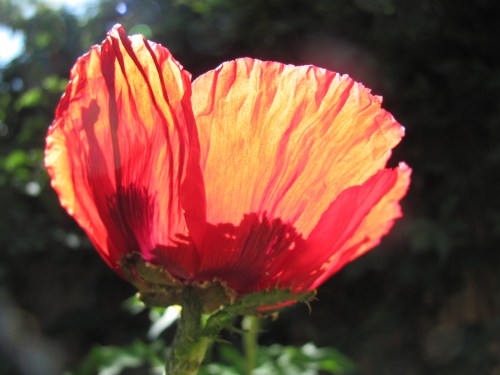
Then when the light hit just right in the afternoon…

All a glow

By evening they had started to tighten back up…

Curling back in for the night

And I was reminded of one of my favorite Quotes by

Anaïs Nin: “And the day came when the risk to remain tight in a bud was more painful than the risk it took to blossom”

Though for only a few days, she shall remain open

I hope you too are enjoying these glorious flower days!!

Transplanting Tomatoes- breaking all the rules

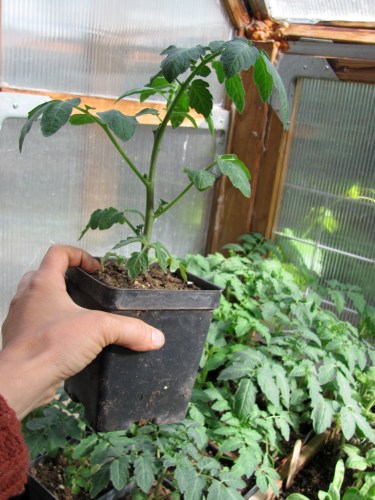
I just posted all about the does and don’t of transplanting, but I want to add something about tomatoes, they defy our rules!!   Most Santa Fe gardeners as far as I know, grow or buy tomato starts, (planting them from seed in the garden after May 15th rarely yields fruit).  They take a long time to really get going and love hot days and cool nights, so greenhouse grown starts are really the way to go.  If you have tomatoes that are tall, leggy and spindly, they may have not been getting enough light in your window sill.  But not all hope is lost, as tomatoes are incredibly adaptable and can be brought to life in the field in a magical way.

Strength is at the top, bottom leaves don’t look so good.

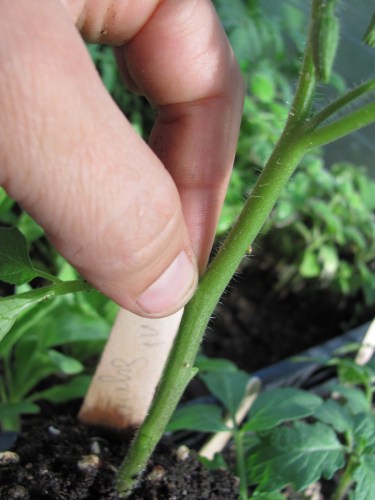
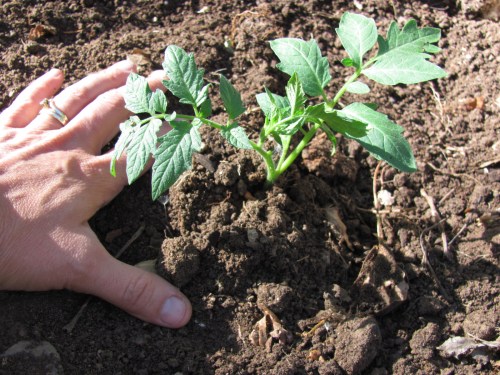
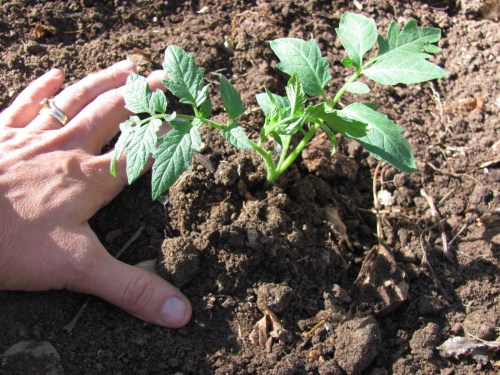
Tomatoes are what is called adventitious rooters, meaning they will sprout roots from leaf nodes if they are exposed to soil.  This is due to a hormone called Auxin in the stem.  Light kills Auxin, but when it is buried under ground it works to stimulate root growth, which means…you can break off the bottom leaves of the tomatoes, leaving just a few a the top

Pinch off lower leaves with clean fingers nails, or very sharp scissors, gentle now, don’t just pull leaving open tears in the stem!

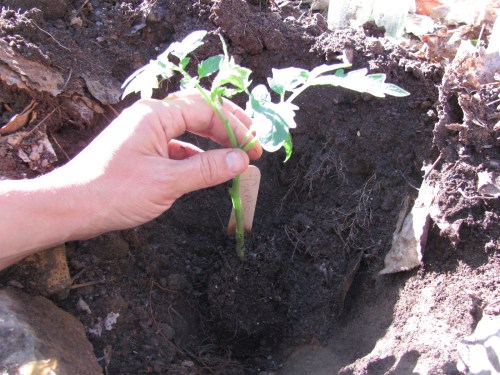
Now make a nice deep hole,

Place it in there gently by the roots, I am holding the stem to show where the ground is level to, I would never carry a plant by the stem!! And neither should you!

and bury the tomato all the way up to the top leaves

Now it is nice and strong and won’t be toppled by the wind

out of where you pulled those leaves off, roots will grow!

Don’t forget to make a moat around it to catch water.

Nice moat for catching water

Also you may have noticed in the pictures that this little guy had developed a flower in the greenhouse

Clean pinch, goodbye flower

So I just pinched it off before transplanting.  A plant needs to get good and strong before thinking about reproducing.  More flowers will come when this guy is big a strong and can support fruit.  So there you have it.  Tricky little tomatoes, but oh so wonderful.

I had big plans of planting all 70 of mine Sunday, but the blessing of rain slowed me down, not only is it wet work to plant in the rain, but mucking around in the garden in the rain creates a mess and can compact the soil badly.  Better to wait a couple of days to let things dry out and get back to that ‘moist as a rung out sponge’ feel.  Works for me, I will harden them off and plant them this Friday or Saturday– both are fruit days FYI!!

P.S. After I wrote my whole post on transplanting, I came  across a similar article in Organic Gardening, so if you still need some guidance, they mention a few things I left out, they are the pros after all! Happy Planting!

Ten Transplanting Tips

Little guys ready to go outside

So when I started gardening in Santa Fe the last frost date was May 15th….this year however it was more like April 15th!! Crazy….But I am still cautious of putting my little starts outside and if you too have waited, dotting over those tiny creatures in your window sill as I have, or worked hard to make money to buy those babies….you want to make sure they have a good strong transition into the great wide open wilderness of your garden from the climate controlled nest from which they are pushed.  So as you prepare for the final transplant, here are a few tips to help those babies along.

Just right

#1-SIZE DOES MATTER– Though it may be transplanting time, are your plants ready to transplant is a really good question to ask – Plants do have an optimum size for transplanting– if it is too big the root to shoot ratio will be way out of proportion and the roots will be circling in the bottom of the pot or the top growth toppling over, many more times higher than the depth of the pot.  In this case plant ASAP and you can also do a little root stimulation to break those pot bound roots out of their tangle, even trimming roots if necessary and prune back the top foliage.  If you haven’t purchased plants yet– please don’t buy things that seem top heavy, and though is pretty, NEVER buy something in flower or fruit stage.  If it is flowering in a pot it is probably stressed and will continue to be in your garden.  Most thing will tolerate a little pruning back, if it is an annual crop and few clean pinches with clean finger nails should do the trick.

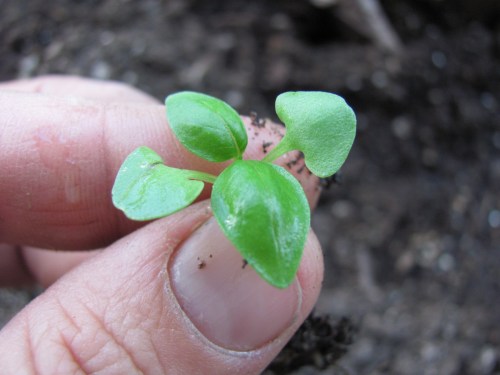
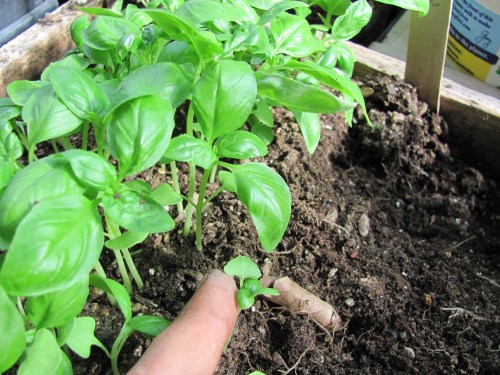
Now If a plant is too small–If a plant is too small for transplanting it will not yet have it’s second set of true leaves and seem very tender.

This Basil is too small…It only has it’s Cotyledons (first growth) and one set of true leaves. Better to wait until it looks more like ….

These Basils are getting second sets of true leaves, much better time to transplant, the one my finger is on is too small, see the difference

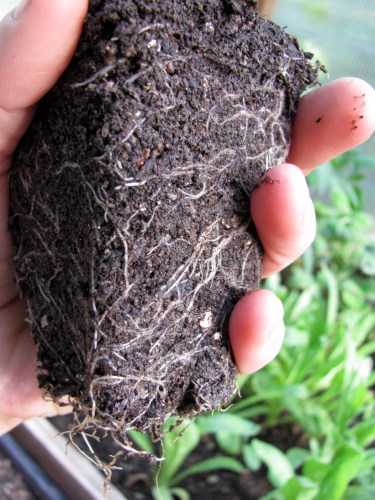
Adequate ‘root knit’ is also a sign your plant is ready, meaning the roots hold the soil(at appropriate moisture, see below) when removed from the pot. Root to Shoot ratio means that the plants has equal root and vegetation growth.

This guy has good root knit- the roots hold in the soil when the soil is moist to the touch

Here is it’s foliage, in balance with the root growth inside the pot

#2-HARDENING OFF- is a process of transitioning your plants from inside to outside taking anywhere from 3-25 days.  You can begin bringing the plants out for a couple of hours each day in a nice shady, cool spot.  Then maybe a few more hours adding direct sunlight, even placing them where you might plant them.  Remember, plants in pots dry out quicker than those in the ground, so keep an eye on them so they don’t dry out.  Little by little, lengthen the days and then add few nights.  Once they have spent a few night outside their cell walls should be acclimated, and hardened enough to be planted in your garden. If you don’t have time to harden things off, see below for ways to protect them in harsh conditions after planting in TAKE COVER.

#3-MOISTURE LEVEL– You don’t want the soil in you pots to be dry and crumbly, nor just watered and thus muddy,  moist to the touch, but not wet.  The best bet is water well in the morning and plant in the evening.  Your roots should hold the soil together enough so that you are planting a soil mass and not bare roots.

Hard to tell moisture form a picture, but about like this

#4-SPACING-You will have in mind how far apart you plants should, be but sometimes you are so eager to get them in the ground you end up with a mess.  I like to mark out my rows with string, that way as I am planting I just plant along the string and measure with my trowel according the to space I want.

Strings strung to keep a straight line when digging trench and planting potatoes

You can also, as a school garden teacher passed on, measure and mark every spot with a popsicle stick, before you plant, that way you get to plant twice!  Exciting if you are a kid gardener.  You can of course plant here and there and everywhere, but keep in mind how big your plants will get when planting, they look little now but just wait till September!! Also irrigation lines, if you are adding them, are linear and can only bend so much, so laying the lines and then planting where the water drips out is a perfect way to get it right.

#5- TIME OF DAY-Think cool and crisp.  I like to transplant in the evening, so peaceful and lovely….some prefer early morning..Or during the day when the shade hits your garden..When ever you choose, try to make sure it is Cool, crisp and the plants will not be in direct sunlight very long.  These days we have had some clouds rolling in and that is perfect for transplanting.

#6- WIND PROTECTION– Spring winds can be fierce and take a toll on young plants, especially those that have never experienced it before inside.  You can’t always predict or work around the winds in spring, but you can protect your plants in a few ways.

Glass Cloche for sale in Italy

Homemade Cloches (glass covers for plants) work well.  Just cut a plastic bottles bottom off and place over the plant after transplanting.  You can leave it on for a week or so until you notice the plant has really taken hold and is showing new growth.

Bottle over a transplant creates a mini greenhouse

You can also add floating row cover for protection from wind, bird, bug, etc…This is basically making a mini hoop house over your bed with wire hoops and woven fabric.  I believe the Row cover is sold by the yard at Plants of the Southwest and the wire is 19 gauge wire you buy in rolls at the hardware store, I found mine at Lowe’s in the back of the garden section with the fencing supplies.  I fasten the cover to the hoops with clothes pins and pile dirt or rocks where it meets the ground.  If the wind gets underneath it, it will take off like a sail. Here is a video on Using Row Covers from Johnny’s Seed Co to get the full idea.

#7- WATER-Water well, really well- The soil into which you plant should be pre-moisten, not a mud hole, but moist.  I like to water the morning before transplanting, so the soil has a bit of time to absorb the water.  If you can’t do that go ahead and water first, then plant.  Once your plant is in the ground, water the plant daily, or twice daily, for about a week until you see it thriving, then you can taper off down your irrigation schedule.  If you are using a cloche, it does create a mini greenhouse so make sure the plant stays moist in there.

#8- DEPTH-Pretty intuitive, but do make sure you plant your plant at the same soil level as it was in the pot.  You can make a little moat around your plant too so that the water will pool around it and not runoff, but seep in slowly around the roots.

Little moat helps catch water

#9- FERTIGATE– Meaning add liquid fertilizer to a watering can, and give a little to each transplant.  This vitamin boost will help them along in the transition.  I use Super thrive and liquid seaweed or Kelp Extract.  Remember a little goes and long way!! (dilution recommendations are on the bottles)

ORGANIC Liquid fertilizers

#10-WHO TO TRANSPLANT— Every seed packet comes with a recommendation for your plants, but in the case that you inherited all home saved seed and don’t know where to begin.

GENERALLY (there are always exceptions)

I like to transplant ( Heat loving Crops)

Tomatoes, Basil, Peppers, Eggplant, Cabbage, Broccoli,

I like to direct seed ( Large Seeded Crops & Roots)

Large Seeded Crops:  Corn,Beans,Squash

Root Crops: Carrots, Beets, Parsnips, Turnips, Rutabega, Kolrabi, Potato, Radish,

Hearty Crops: Dill, Kale, Chard, Arugula, Leeks

Things that don’t transplant well: Spinach, Cilantro, Peas

Exceptions: Onions (though onion sets are transplanted and do wonderfully here) Lettuce does well direct seeded, though I do transplant lettuce for early crops,

Summer Squash, Melons, and Cucumber are traditionally planted direct seed, but I have had great luck transplanting them.

Growing it with Greywater

A friend came over recently and was astounded by my front garden.  “You must water like crazy!!”  That I do NOT, but there are a few elements that help this garden abound in the spring time.

Lush spring garden green

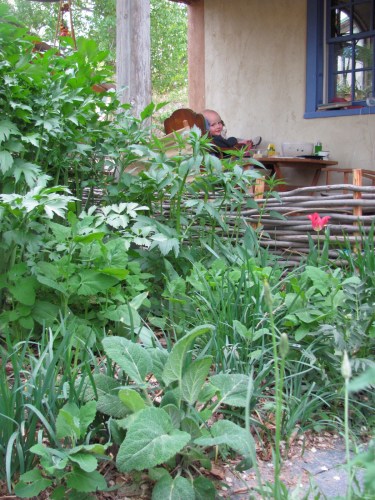
First I credit the Plants; Edible, Medicinal and Beautiful…This garden is mainly self-sown  (plants that like it here, drop their seed every season, spread and thrive) like Catnip, Clary Sage, Columbine, Lamb’s Quarters, and planted ones like Tarragon, Horse Radish, Yarrow, Mint, Jupiter’s Beard, Loveage, Lavender, Lemon Balm, Valerian, Echinacea, Rudbeckia, Day lily, Comfrey, Iris, Bleeding hearts, Hummingbird Sage, Bee Balm, Garlic Chives, Chervil, Ground Geranium and Tulips, Daffodils, Snapdragons, Clover, Poppies, & Rue, to name a few.  The annuals are put in other spots around the yard.

Shady now most of the day

The Sunlight….The garden is in full sun in the spring, until about May 1st, when the trees above it leaf out and create a very shady garden, cooling it in the summer months.

The Time….garden is old, about 10 years of adding compost & mulch makes a big difference in getting it established, enriching the soil and covering up any bare ground, and of course keeping that moisture in!!

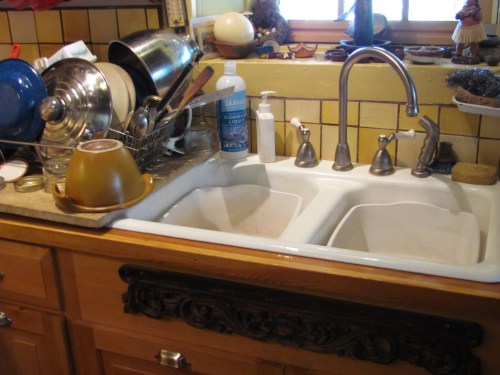
And of course the Dishwater.  Yep– year round, every day, sometimes twice a day this garden gets oh,  maybe 4 gallons of dishwater dumped here and there.  I let the days dishes gather, neatly by the sink, organize from cleanest to dirtiest.  When the time comes, either in the quiet of evening or along with morning coffee, but strictly ONCE a day, (who wants to do dishes more than once a day?) I fill up my bins, squirt a little sodium free soap in and wash.  When complete, I dump the bins out the front door and begin the dish gather again.

The basins in the sink get filled once a day and dumped in the garden

The garden soaks it up like sponge and come spring just booms with delight.  I do water it with the hose too, but not very much.  In the hottest days of summer maybe once a week, and from November to April, not at all.  I won’t claim to be a radical water saver myself, but let’s face it, the stuff is sacred, the bearer and giver of all life on the planet, it is not to be wasted, and we each must do more to honor the water we have.

Every Drop a Miracle

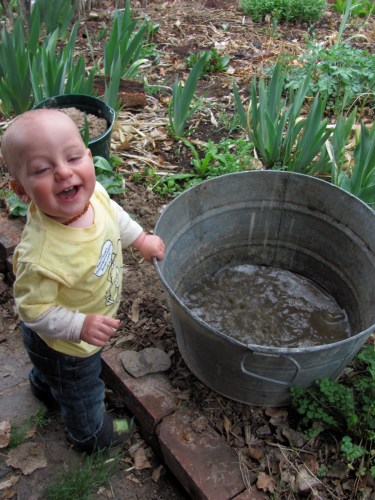
A friend of mine, Amanda, is in fact totally radical water keeper, using and reusing only rainwater for herself and her family to drink, bathe, cook, wash, live in the high dry desert.  Totally an inspiration when it comes to, well everything, but we do what we can, as we can…….so little by little I am trying to reuse, conserve, respect and honor our sacred water by dumping it in the garden and watching it grow, and who knows, maybe someday it will turn into, more water!!

Catch every drop

My Handmade Garden Fence

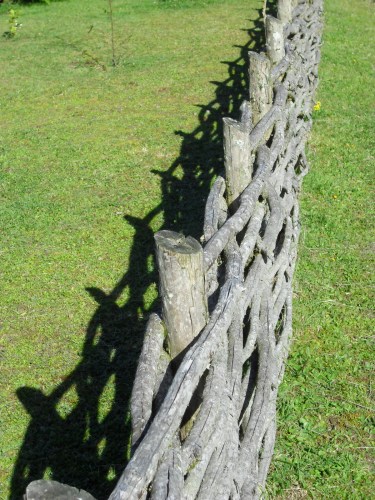
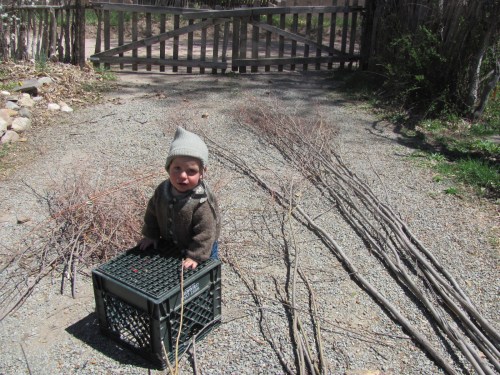
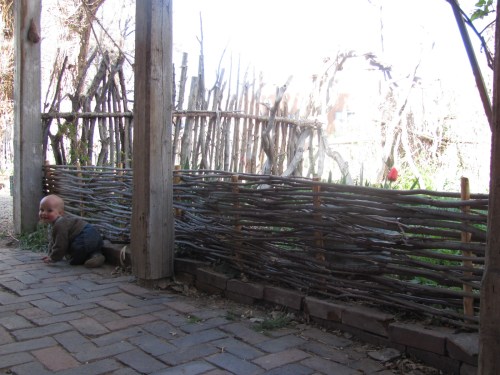
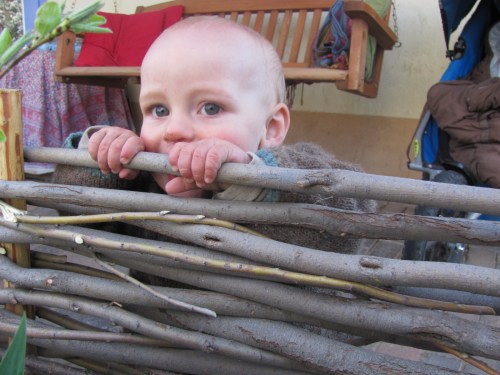
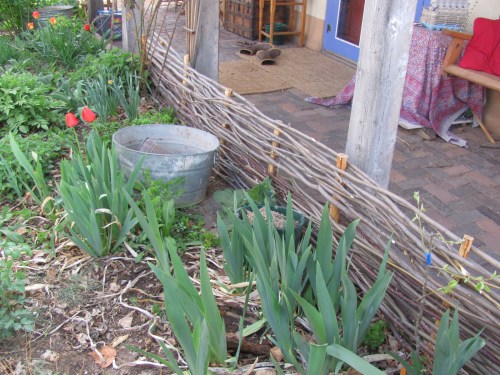
Well, I made myself a garden fence today…why do I post about it?….  Well because it was fun, creative and free, which are all inspiring to me, I thought they might be to you too.  I know it would have been easier to drive down to Home Depot a buy some easy insert lattice action, but who knows where that wood comes from and who puts it together, and heck why buy when you can DIY.  As I have said before I am also time rich and cash poor…and happen to live 100 yards from river with a generous willow patch…so I really saw no other way than to make it myself.  That and I had a vision of what I wanted and I knew I couldn’t buy it.  I  started with my inspiration.An amazingly beautiful fence on a meticulous farm in Patagonia, Chile we visited a few years back.  It was so tidy, keeping in these perfectly white sheep who were keeping the green, green grass perfectedly trimmed…. we might as well have been in the England…or as we called it Douglandia…but I will save that story for another time.  I also got a little inspiration wasting too much time on Pinterest.  Anyway, with the babe trying to pull himself up by hanging onto the rose bushes, a fence was in order around here. So we went down to the river & gathered a ton of really tall straight willow branches, trimmed off the side & top little branches….until we had nice clean long weaving sticks.  I actually did buy a few stripped cedar latillas which I cut down to 3ft each to use as the posts.  I would have used willow but Joel reminded me cedar was a lot stronger and would resist rot in the wet garden a lot longer than willow would.  I sunk them into the garden about 2 ft apart and about 1 ft deep with a sledge-hammer and then I was ready to weave.This was taken right as I sunk the first cedar posts…….And this was taken when I was down the weave.  It does the trick of keeping Jangy out of the garden and he sure seems to like it pulling himself up on it.His pure delight was more than I could have hoped for.Which made my delight all the more.

If you are inspired to do the same, just a little note– I used way more willow than I imagined I would have, I think there is something like 50 ten footers for a 1.5foot high fence.  Lucky willow is an abundant renewable resource here. Use what you have, the is earth is generous with her offerings if you know how to see them.  Here is a cool link called the Willow Bank for further inspiration

What to plant When?-The ever burning question

I started teaching classes again, talking to friends and doing my own garden planning and this question comes up every season- What to plant when— I tried to answer it as simply as I could by just sharing what I do at home, so here is my garden schedule in case you want to follow my lead– PS if you are in Santa Fe don’t stress about being behind me, it is just a bit warmer here in the Pojoaque banana belt so you have a bit of a grace period.  I hope this helps makes gardening just a bit easier for everyone, but don’t take my word for it, grow it yourself, and do let me know how it goes!!Image